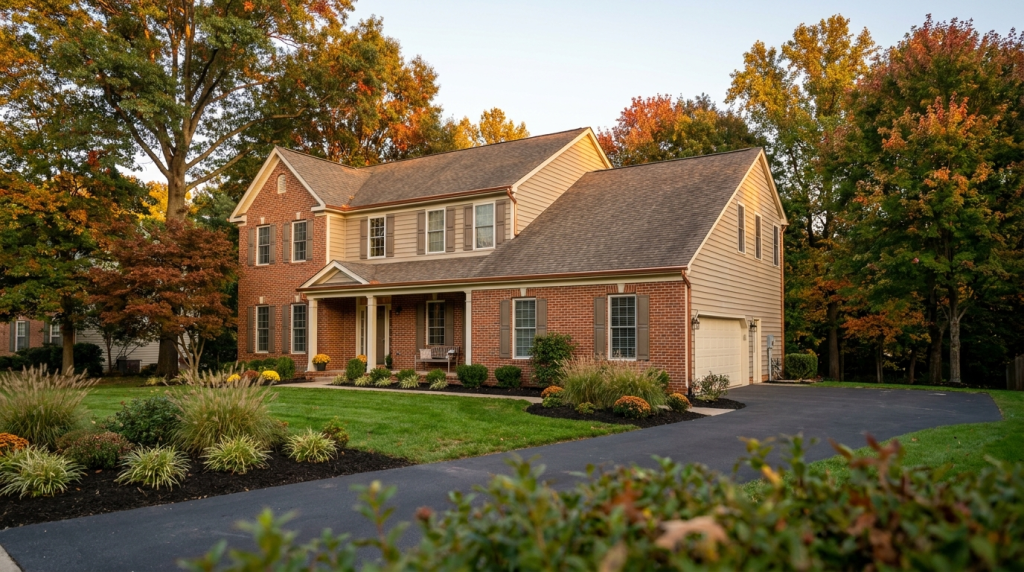
Every fall in Northern Virginia, I walk homes where a $40 gutter cleaning would have prevented a $9,000 basement repair. Our region hands homeowners a specific combination of problems — heavy oak canopy, clay-heavy soil that holds water, and a freeze-thaw cycle that starts in late November and doesn’t quit until March. The good news is that the list of things that actually matter is short, and most of it can be handled between mid-September and the first hard freeze.
Start with water: gutters, grading, and the basement
Water is the single most expensive thing that goes wrong with a Northern Virginia home, and fall is when it starts. If your house sits under mature oaks — common in older Vienna, Falls Church, and Annandale neighborhoods — you will likely need gutters cleared twice: once in mid-October and again after the last leaves drop in late November. Newer communities in Ashburn, Brambleton, and South Riding have younger trees but tighter lot grading, which means downspout extensions matter more than most owners realize.
Walk the perimeter of your foundation after a good rain and look for soil that has settled toward the house. Our clay soil compacts over time, and a negative slope that developed quietly over five years is the reason many finished basements in Loudoun County take on water during a February thaw. Regrading a problem corner costs a few hundred dollars. Remediating a wet basement, plus the disclosure you will owe a buyer later, costs far more.
If you have a sump pump, test it now by pouring a bucket of water into the pit. If you do not have a battery backup, fall is the right time to add one — our worst basement flooding usually happens during storms that also knock out power.
Get the mechanicals serviced before everyone else calls
Schedule your HVAC service call in September or early October. By the first genuinely cold week, every reputable company in Fairfax and Loudoun is booked two weeks out, and emergency rates apply. A standard tune-up runs roughly $100 to $200 and catches the two failures that strand people in January: a cracked heat exchanger and a failing inducer motor.
While you are at it, shut off and drain your exterior hose bibs. Frozen spigots are one of the most common winter insurance claims in our area, and the damage usually shows up inside a finished wall.
The small items inspectors flag again and again
When a buyer’s inspector writes up your home, the report rarely leads with something dramatic. It leads with a page of small, visible deferred maintenance — and that page is what makes a buyer nervous enough to ask for a large credit. Handle these now and they never appear:
- Failed caulk and glazing around windows and exterior trim
- Loose deck railings and popped deck fasteners
- Dryer vents clogged with lint, which is both a fire hazard and an easy write-up
- Cracked or lifted driveway and walkway sections that trap water
- Smoke and carbon monoxide detectors older than ten years
- Mulch or soil piled against siding, which invites both moisture and termites
What adds value versus what just keeps you even
It helps to be honest about the difference. Maintenance protects the price you already have; it rarely raises it. A clean, dry, well-serviced house sells at the top of its range because nothing gives a buyer a reason to negotiate. Improvements are a separate decision, and in Northern Virginia the ones that consistently return the most are kitchens, primary baths, and finished lower levels — done to the standard buyers here expect, not done cheaply.
Fall is genuinely the best window to start that work. Contractors have more availability between November and February than they do in spring, and a project that begins in October is finished and photographed in time for a March listing. When clients are weighing a pre-sale renovation, I walk the house with them and bring in my partners at EA Home Design so we can talk about scope and real numbers before anyone commits. If you are not sure whether your home needs work or just needs preparation, start with a current home value estimate and my seller resources — and if you are eyeing a move within the area, the Ashburn community guide is a good place to see what your equity buys today.
Frequently Asked Questions
When should I do fall home maintenance in Northern Virginia?
Aim for mid-September through early November. Book HVAC service first, since Fairfax and Loudoun contractors fill up by the first cold week, and save the final gutter cleaning for late November after the oaks finish dropping.
Does fall maintenance actually affect what my home sells for?
Indirectly, and significantly. Maintenance rarely raises your list price, but a clean inspection report protects it. In Northern Virginia, a two-page repair list routinely turns into a five-figure buyer credit request.
What do Northern Virginia home inspectors flag most often?
Water intrusion and grading issues top the list, followed by aging HVAC systems, failed exterior caulk, deck railing problems, and clogged dryer vents. Almost all of them are inexpensive to fix before a home goes on the market.
Is fall a good time to remodel before a spring listing?
Yes. Contractor availability is better from November through February than in spring, so a kitchen or lower-level project started in October is typically complete, photographed, and ready for a March listing.
Should I replace an aging roof before selling, or offer a credit?
It depends on the roof’s remaining life and your local competition. If it is under fifteen years old and not leaking, most Northern Virginia buyers will accept it with documentation. If it is visibly failing, replacing it usually nets more than the credit a buyer will demand.
Let’s look at your home together
Whether you are selling next spring or simply want to keep your largest asset in good shape, a short walk-through goes a long way. I will tell you honestly what is worth doing, what can wait, and what a buyer in your neighborhood will actually pay for. Book a free consultation or call me directly at (571) 429-7477 — and if you are planning a purchase alongside a sale, my buyer resources will help you map out the timing.