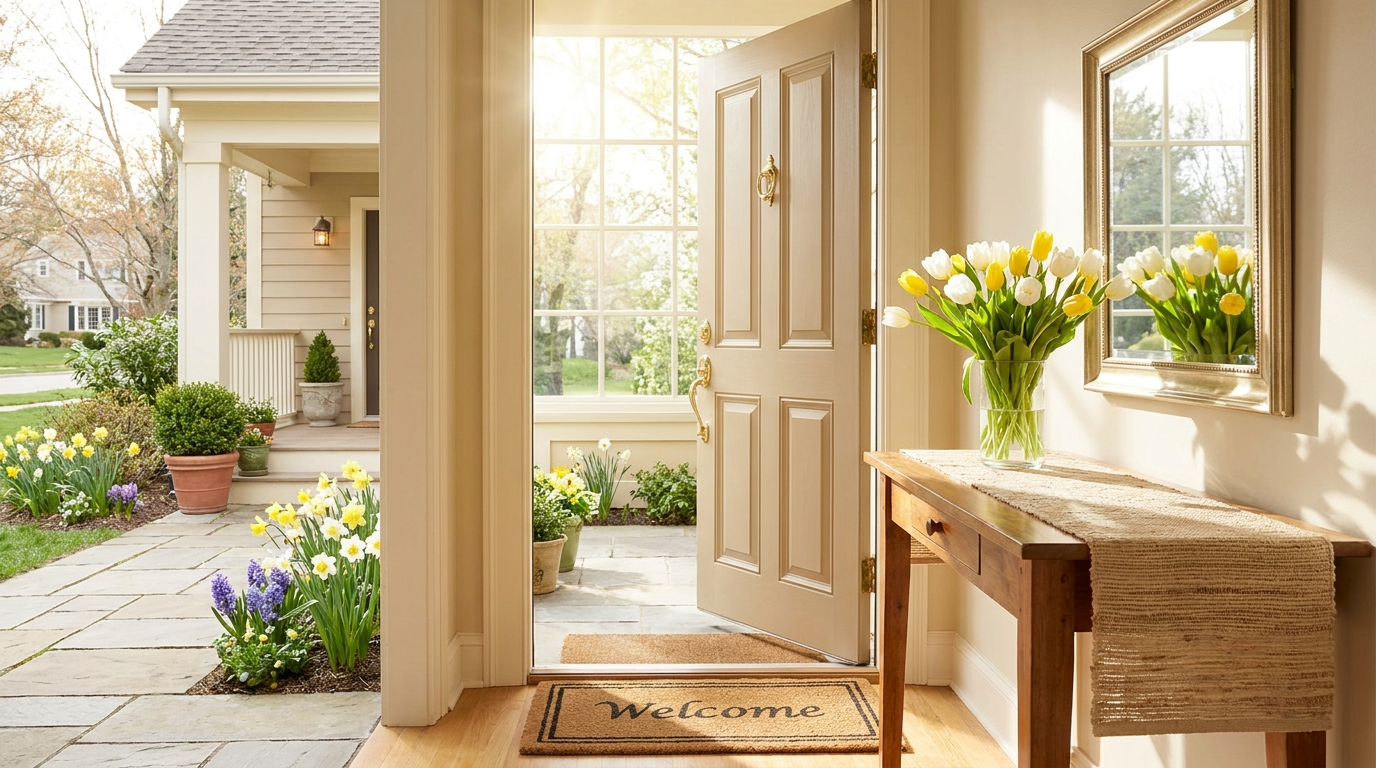
Spring Open House Tips: Making the Most of Your Open House

A successful spring open house comes down to fresh curb appeal, clean and inviting staging, smart timing, and strong promotion. Spring is the busiest buying season in Northern Virginia, so a well-run open house in Ashburn, Fairfax, or Loudoun can attract serious buyers and competing offers. The goal is simple: help visitors picture themselves living there from the moment they arrive.

Here are the tips I share with my sellers to make the most of the season.

Why is spring such a great time for an open house?

Spring is when buyer activity peaks. Families want to settle in before the next school year, gardens and landscaping look their best, and longer days mean more natural light to show off a home. Here in Northern Virginia, the spring market often brings out the most motivated buyers, which is exactly who you want walking through your door.

That heightened demand also means more competition among listings, so a polished, memorable open house genuinely helps you stand out.

How do I maximize curb appeal in spring?

First impressions begin at the curb, and spring gives you wonderful material to work with. Before your open house:

  • Refresh the landscaping with mulch, trimmed shrubs, and seasonal flowers.
  • Power-wash the driveway, walkway, and siding.
  • Clean the front door, polish the hardware, and consider a fresh coat of paint.
  • Add a tasteful welcome touch, like a clean doormat and a planter by the entry.
  • Make sure the lawn is freshly mowed and edged.

Buyers often decide how they feel about a home before they even step inside, so this small investment pays off.

What is the best way to stage for a spring open house?

Spring staging is all about light, freshness, and space. Open the curtains and blinds to let in natural light, and consider light, airy fabrics to match the season. Declutter every room and depersonalize so buyers can imagine their own lives there.

A few fresh flowers, a bowl of lemons in the kitchen, and subtle, clean scents make a home feel welcoming without feeling staged. The aim is a space that feels bright, cared-for, and move-in ready.

How should I time and promote my open house?

Timing and marketing make a real difference in turnout. A few guidelines I recommend:

  • Host on a weekend, typically Saturday or Sunday afternoon, when most buyers are free.
  • Promote across the MLS, social media, and email at least a week in advance.
  • Use clear, well-placed directional signs in the neighborhood.
  • Have professional photos ready so online listings draw people in first.
  • Provide a simple flyer with key details and your contact information.

As your agent, I handle this promotion for you, combining professional marketing with local reach so the right buyers know about your home. You can see how I support sellers from listing through closing.

What should sellers do on the day of the open house?

On the day itself, the best thing a seller can do is step away. Buyers feel freer to explore and speak openly when the owner is not present. Before you leave, do a final walkthrough to confirm the home is spotless, well-lit, and comfortably climate-controlled, and secure any valuables and personal documents.

If you are curious what your home could sell for this spring, my free home valuation tool is a great first step before we plan your open house strategy together.

The bottom line

A standout spring open house blends fresh curb appeal, light and inviting staging, good timing, and strong promotion. Done well, it can turn casual visitors into eager buyers and help you sell faster and for more, especially in our competitive Northern Virginia market.

Thinking about selling this spring? Book a free consultation through my booking page or call me at (571) 429-7477, and let’s create an open house strategy that gets your home noticed and sold.


Maximizing Your Home’s Value: Essential Tips for Sellers

If you’re preparing to sell, here’s the truth most sellers learn too late: the highest-return improvements are usually the cheapest ones. Paint, lighting, deep cleaning, and curb appeal routinely return several times their cost in Northern Virginia, while big renovations often return only 60–70 cents on the dollar. Spend where buyers’ eyes go first, and let the market reward you.

After years of listing homes across Fairfax, Loudoun, Arlington, and Alexandria, here’s exactly where I tell my sellers to focus.

Start With a Baseline: What Is Your Home Worth Today?

Before spending a dollar, know your starting point. A pricing consultation tells you what your home would sell for as-is versus with targeted improvements — sometimes the as-is number is strong enough that major prep isn’t worth your time, especially in low-inventory NoVA neighborhoods. Get a free estimate through my home value tool and we can build the plan from there.

The High-ROI Basics Every Seller Should Do

  • Fresh neutral paint — the single best return in real estate; warm whites and soft greiges photograph beautifully.
  • Lighting — replace dated fixtures and put the brightest appropriate bulbs in every room. Bright homes feel bigger and newer.
  • Deep clean and declutter — buyers open closets. Rent a storage unit if needed; half-empty closets read as “plenty of storage.”
  • Curb appeal — fresh mulch, trimmed shrubs, a painted front door, new house numbers. Buyers decide a lot in the first ten seconds.

Which Bigger Projects Are Worth It — and Which Aren’t?

Worth considering: refinishing hardwood floors, replacing worn carpet, painting (not replacing) dated kitchen cabinets, and updating cabinet hardware and faucets. Rarely worth it before selling: full kitchen or bath remodels, additions, and swimming pools. Buyers pay for move-in-ready, not for your contractor’s invoice. In older Arlington and Alexandria homes, money is often better spent on unglamorous items — a new water heater, panel upgrades, roof repairs — that keep the home inspection clean and the contract intact.

Don’t Skip the Pre-Sale Systems Check

Northern Virginia buyers are inspection-savvy. Before listing, have your HVAC serviced, fix minor plumbing drips, replace cracked outlet covers, and address any moisture signs in the basement. A $300 service call now beats a $3,000 credit negotiation later — or worse, a buyer walking during the inspection window.

Staging: Does It Really Matter?

Yes, and more than most sellers expect. Staged homes photograph better, and photos determine which homes buyers tour. That doesn’t always mean hiring a full staging company — often we work with what you own, remove a third of the furniture, and stage the three rooms that sell houses: living room, primary bedroom, and kitchen/dining. My seller services include a room-by-room prep plan so nothing is left to guesswork.

Frequently Asked Questions

What home improvement adds the most value before selling?

Fresh interior paint in modern neutrals delivers the highest return — often several times its cost — followed by lighting updates and curb appeal work.

Should I remodel my kitchen before selling?

Almost never fully. Painting cabinets, new hardware, updated lighting, and fresh caulk deliver most of the visual impact for a fraction of the cost of a remodel.

How much does staging cost, and is it worth it?

Light staging using your own furniture can cost little to nothing; professional staging for a vacant NoVA home typically runs $2,000–$5,000 and usually pays for itself in stronger offers and faster sales.

Should I fix everything the inspector might find?

No — fix safety items, active leaks, and cheap cosmetic issues. Disclose the rest and price accordingly; over-repairing before listing wastes money on items buyers won’t pay extra for.

Thinking about selling this year? Book a free consultation or call me at (571) 429-7477, and I’ll show you exactly which improvements your specific home and neighborhood will reward.

The Smart Investor’s Guide to Buying a Duplex

A duplex is a single building with two separate living units, and it is one of the most approachable ways to start investing in real estate. It qualifies for ordinary residential financing, produces two income streams instead of one, and if you live in one side you can often buy it with a small down payment. In an expensive market like Northern Virginia, that combination makes a duplex the most realistic first step many of my investor clients ever take.

How Does Duplex Financing Work?

Because a duplex has fewer than five units, lenders treat it as residential rather than commercial. That distinction is worth a great deal of money.

  • Owner-occupied: FHA financing typically allows as little as 3.5 percent down, and VA financing can allow zero down for eligible service members and veterans, provided you live in one unit.
  • Conventional owner-occupied: generally around five percent down for a two-unit primary residence.
  • Pure investment purchase: expect roughly 20 to 25 percent down and a slightly higher rate.

Lenders will also usually let you count a portion of the projected rent from the second unit toward your qualifying income, which meaningfully increases your buying power. Ask your lender exactly what percentage they credit and what documentation they need, because it varies.

The House Hacking Advantage

Living in one unit while renting the other is the strategy that makes duplexes so effective for first-time investors. Your tenant’s rent offsets a large share of your mortgage, you build equity while your housing cost drops, and you learn to be a landlord on one unit rather than ten.

There is also a tax dimension worth discussing with your accountant: the rented portion of the property generally allows deductions for depreciation, repairs, and a share of operating costs that a normal homeowner cannot take.

How to Underwrite the Deal

Buy on the numbers, not the finishes. Before you offer, build a simple projection:

  • Income: realistic market rent for each unit, verified against actual comparable rentals rather than the seller’s optimism.
  • Vacancy: subtract five to eight percent even in a strong rental market like ours.
  • Operating expenses: property taxes, insurance, water and any owner-paid utilities, lawn and snow, routine maintenance, and management at eight to ten percent whether or not you hire someone.
  • Capital reserves: set aside for roof, HVAC, water heaters, and flooring. These are certainties, not risks.

What remains after the mortgage is your cash flow. If a deal only works when you assume no vacancy, no repairs, and self-management for free, it does not actually work.

What Should You Check Before You Buy?

Duplex due diligence goes beyond a standard home inspection:

  • Are the units separately metered for electric, gas, and water? If not, budget for the shared bill or the cost of separating them.
  • Is the second unit legal and permitted? Informal basement conversions are common in Fairfax and Arlington, and an unpermitted unit puts your rental income at risk.
  • What do the existing leases say? You inherit tenants, terms, and security deposits at settlement.
  • How is sound and fire separation between units? Poor separation drives turnover.
  • Is there adequate parking for two households, and does the county require a minimum?
  • What is the age and condition of each unit’s HVAC, water heater, and roof?

Also confirm zoning directly with the county rather than trusting the listing. Fairfax, Loudoun, Arlington, and Alexandria each handle two-unit and accessory dwelling classifications differently.

What Does This Look Like in Northern Virginia?

Purpose-built duplexes are relatively scarce here. Most of the genuine two-unit inventory sits in older, closer-in neighborhoods of Alexandria and Arlington, with occasional opportunities in established parts of Fairfax County.

Farther west in Loudoun and Ashburn, the practical equivalent is a single-family home with a legal accessory dwelling unit, a finished lower level with its own entrance and kitchen. These can perform very much like a duplex, but the permitting question becomes the whole ballgame, so verify it before you write.

The upside of the scarcity is that well-located two-unit properties here hold their value unusually well, supported by a deep and stable renter pool tied to federal, defense, and technology employment. You can see how I work with investors on my investing page, and how I handle tenant placement and leasing on my rental services page.

Frequently Asked Questions

Can I buy a duplex with an FHA loan?

Yes, as long as you occupy one of the two units as your primary residence. FHA financing on a two-unit property typically requires as little as 3.5 percent down for qualified borrowers.

Is a duplex a better investment than a single-family rental?

It depends on your goals. A duplex generally produces stronger cash flow and spreads vacancy risk across two tenants, while single-family homes often appreciate more predictably and are easier to resell. Many investors in Northern Virginia start with a duplex for the income and add single-family later for the growth.

How much cash do I need to buy a duplex in Northern Virginia?

If you plan to live in one unit, expect your down payment plus roughly two to five percent of the purchase price in closing costs, plus reserves. A pure investment purchase generally requires 20 to 25 percent down.

Do I have to keep the existing tenants after I buy?

Generally yes. Existing leases transfer with the property in Virginia, so you inherit the terms, the rent, and the security deposits until those leases expire. Review every lease before you go under contract.

Let’s Look at Your First Deal

If you are considering a duplex or a two-unit property in Northern Virginia, I will help you underwrite it honestly before you commit. Book a free consultation or call me at (571) 429-7477.

Mastering the Art of the Deal: How to Win a Bidding War on a House

Embracing Independence: Navigating the ‘For Sale by Owner’ Path in Real Estate