Smart Mortgage Strategies for Northern Virginia Buyers: Buydowns, Points, and ARMs Explained

In a market as competitive as Northern Virginia’s, most buyers obsess over the offer price and overlook the lever that often matters more: how the loan itself is structured. The difference between a well-negotiated rate strategy and a default 30-year quote can easily be a few hundred dollars a month in Fairfax, Loudoun, or Arlington. Here is how buydowns, discount points, and adjustable-rate mortgages actually work, and when each one makes sense for a NoVA purchase.

Why Your Rate Strategy Matters as Much as Your Offer

With median prices in much of Fairfax and Arlington counties sitting well above the national average, every fraction of a percentage point on your mortgage translates into real money. On a typical Northern Virginia loan amount, a half-point rate difference can change your monthly payment by $200 or more. That is why savvy buyers negotiate financing concessions alongside price, and why the buyer consultation process I use starts with payment strategy, not just a price range.

Temporary Buydowns: The 2-1 and 1-0

A temporary buydown reduces your interest rate for the first year or two of the loan. With a 2-1 buydown, you pay a rate 2% below your note rate in year one and 1% below in year two, then the full rate from year three on. A 1-0 buydown discounts just the first year.

The key detail: in our market these are usually funded by the seller or builder, not the buyer. New-construction builders in Loudoun communities like Ashburn and Brambleton frequently offer buydown incentives through their in-house lenders. On resale homes, a seller-funded buydown can be a smarter ask than a price cut, because it lowers your payment more per dollar of concession.

Permanent Buydowns: When Paying Points Pays Off

Discount points permanently lower your rate, with one point costing 1% of the loan amount. Whether points are worth it comes down to break-even math: divide the cost of the points by your monthly savings to see how many months it takes to recoup the expense. For most buyers the break-even lands somewhere in the five-to-seven-year range.

If you are relocating for a three-year assignment at the Pentagon or a short-term contract in the Dulles tech corridor, points rarely make sense. If you are settling into a forever home in Vienna or McLean, they often do.

Adjustable-Rate Mortgages: Not the Villain They Used to Be

Today’s ARMs bear little resemblance to the loans that caused trouble before 2008. Modern ARMs are fully underwritten at the adjusted rate and carry caps that limit how much the rate can move at each adjustment and over the life of the loan. A 7/6 ARM, for example, holds a fixed rate for seven full years before adjusting every six months.

Given that many Northern Virginia owners move within seven to ten years, an ARM’s lower initial rate can be a rational trade. It is not for everyone, but it deserves a spot on your comparison sheet.

How to Shop Lenders the Right Way

Whatever structure you choose, the lender you pick matters. A few habits that consistently save NoVA buyers money:

  • Get loan estimates from at least three lenders on the same day, since rates move daily and quotes are only comparable when pulled together.
  • Include one local lender who knows Northern Virginia appraisers and can close on the 21-to-30-day timelines our market often demands.
  • Compare the full loan estimate, not just the rate, because lender fees can quietly erase a rate advantage.
  • Ask every lender to price the same three scenarios: par rate, one point, and a seller-funded 2-1 buydown.

And if you already own in the area, knowing your current equity position shapes everything about your next purchase. A quick home value check is the right first step before you talk to any lender.

Put a Payment Strategy Behind Your Offer

The strongest offers in Northern Virginia pair a smart price with financing that is structured to win. I work with trusted local lenders every week and can help you decide which of these tools fits your situation before you ever write an offer. Book a free consultation or call me directly at (571) 429-7477 and let’s build your plan.

Frequently Asked Questions

Should I wait for mortgage rates to drop before buying in Northern Virginia?

Usually not. Home prices in Fairfax, Loudoun, and Arlington counties have kept climbing even when rates were elevated, so waiting often costs more than it saves. Buy the right home when you find it, and refinance if rates fall later.

What is a 2-1 buydown and who pays for it?

A 2-1 buydown lowers your interest rate by 2% in year one and 1% in year two before returning to the full note rate. In Northern Virginia it is typically funded by the seller or builder as a negotiated concession, not by the buyer.

When are discount points worth buying?

Points make sense if you plan to keep the loan past the break-even point, usually five to seven years. If you expect to move or refinance sooner, keeping the cash for closing costs or reserves is often smarter.

Are adjustable-rate mortgages risky for NoVA buyers?

Today’s ARMs are fully underwritten with rate caps, so they are far safer than pre-2008 versions. A 7/6 ARM can work well in Northern Virginia, where many owners move within seven to ten years, but a fixed rate is still the safer default if you plan to stay long term.

What to Expect from a Home Inspection in Northern Virginia

A home inspection is one of the most important steps between your accepted offer and closing day — and in Northern Virginia, where properties range from 1940s Arlington bungalows to brand-new Loudoun County builds, what turns up can vary a great deal from one home to the next. A thorough inspection gives you a clear, unemotional picture of a home’s condition so you can move ahead with confidence or renegotiate with facts on your side. Here is what to expect, and how to make the inspection work in your favor.

What a Home Inspection Actually Covers

A licensed inspector typically spends two to four hours examining the home’s structure and major systems, then delivers a written report — usually full of photos — within about a day. They are evaluating the bones and the working parts of the house, not the paint colors. Expect them to look closely at:

  • Roof, gutters, siding, and the grading around the foundation
  • Structure, attic, and any signs of past or present water intrusion
  • Electrical panel, wiring, and outlets
  • Plumbing supply lines, drains, and the water heater
  • HVAC system, ductwork, and insulation
  • Windows, doors, and visible evidence of pests or moisture

An inspector will not open up walls or move heavy furniture, so the report reflects what is visible and accessible on inspection day. When something falls outside their scope — a possible foundation concern, an aging chimney, a suspect heat exchanger — they will recommend that a specialist take a closer look before you close.

Local Issues Northern Virginia Inspectors Watch For

Every market has its quirks, and NoVA is no exception. A few things come up often enough here that they are worth a little extra time and budget to check.

Radon

Fairfax, Loudoun, and Arlington all sit in an area the EPA flags as having high radon potential. Radon is an odorless gas that is inexpensive to test for during your inspection, and mitigation systems are straightforward to install if levels come back elevated. It is one of the smartest add-ons a Northern Virginia buyer can request.

Well and Septic Systems

If you are buying in western Loudoun or the more rural pockets of Fairfax — places like Purcellville, Middleburg, or Great Falls — the home may run on well water and a septic system rather than public utilities. These call for their own separate evaluations: a water-quality test for the well and a professional septic inspection, neither of which is included in a standard home inspection.

Older Homes and Their Systems

The charming older neighborhoods of Arlington, Alexandria, and Falls Church often feature pre-1970s construction that deserves extra attention — aging electrical panels, galvanized or polybutylene plumbing, original HVAC equipment, and the possibility of lead paint or asbestos in homes built before the late 1970s. None of these are automatic dealbreakers, but you will want to know about them before you own them.

How to Read the Report Without Panicking

Almost every inspection report looks alarming at first glance — even a well-kept home will generate pages of notes. The goal was never a flawless house; it is understanding which items are routine maintenance and which are genuinely meaningful. Focus your energy on health-and-safety concerns and the big-ticket systems: roof, foundation, HVAC, electrical, plumbing, and water. A worn caulk line is not the same as a twenty-year-old furnace, and a good agent will help you tell the difference.

Turning the Inspection Into Leverage

In Virginia, most purchase contracts include a home inspection contingency that gives you a defined window — often just a few days — to review the findings and respond. Depending on how your offer was written, you may be able to request repairs, ask for a closing-cost credit, renegotiate the price, or walk away entirely. In Northern Virginia’s competitive market, some buyers strengthen their position by arranging a pre-inspection before they even write an offer, so they can act quickly and with full information. Your options come down to how the contract is structured, which is exactly why it helps to have an experienced buyer’s agent shaping your strategy from the very first showing.

Frequently Asked Questions

How much does a home inspection cost in Northern Virginia?

Most single-family home inspections in the NoVA area run roughly $400 to $700, depending on the size and age of the home. Add-ons such as a radon test or separate well and septic evaluations cost extra, but they are often well worth it.

Do I really need a home inspection in a competitive market?

Yes. Even when you are competing for a home in Fairfax or Arlington, an inspection protects you from expensive surprises. Some buyers arrange a pre-inspection before making an offer so they can stay competitive while still understanding the home’s true condition.

Should I test for radon in Fairfax, Loudoun, or Arlington?

It is strongly recommended. All three counties sit in an EPA high-radon-potential zone, and testing is inexpensive. If levels come back elevated, a mitigation system is a relatively simple and affordable fix.

What happens if the inspection finds problems?

It depends on how your contract is written, but you will typically be able to request repairs, ask for a credit toward closing costs, renegotiate the price, or in some cases void the contract within your inspection contingency period.

How long does a home inspection take?

A typical single-family home inspection takes about two to four hours, and you will usually receive the written report within 24 hours. Attending in person is a great way to learn about your future home firsthand.

Buying a home in Northern Virginia is a major decision, and you should not have to interpret an inspection report on your own. As an award-winning local agent, Ellie Asemani helps buyers across Fairfax, Loudoun, and Arlington counties line up trusted inspectors, make sense of the findings, and negotiate from a position of strength. Ready to talk through your next move? Book a free consultation or call Ellie directly at (571) 429-7477 — no pressure, just clear, local guidance.

How to Stage Your Northern Virginia Home to Sell Faster and for More

When a home is priced right and shows well, it sells faster and for more — and in Northern Virginia’s competitive market, staging is one of the highest-return moves a seller can make before listing. Buyers here often tour a dozen homes in a single weekend, so the ones that feel bright, clean, and move-in ready are the ones that earn strong offers. Here is how to stage your Fairfax, Loudoun, or Arlington home so it stands out.

Why Staging Pays Off in Northern Virginia

Our buyers tend to be busy professionals, commuters, and dual-income households who want a home they can move into without a long to-do list. A staged home helps them picture their life in the space instead of the work it might need. It also matters online: the vast majority of Northern Virginia buyers start their search on a phone, so a home that photographs beautifully is what earns that first in-person tour. Homes that look cared for signal they have been maintained — an easy way to build buyer confidence before anyone walks through the door.

Start With Decluttering and a Deep Clean

Before you buy a single new throw pillow, edit and clean. Decluttering makes rooms feel larger, and a spotless home reassures buyers about everything they cannot see. Work room by room and be ruthless — anything you will not need in the next two months can be packed and stored.

  • Clear kitchen and bathroom counters down to a few tasteful items.
  • Pack away about half of what is in your closets so they look spacious.
  • Depersonalize by removing family photos, collections, and fridge clutter.
  • Deep clean floors, windows, grout, and baseboards until everything shines.
  • Neutralize odors — pet areas and last night’s dinner are quiet deal-breakers.

Prioritize the Rooms That Drive Offers

You do not need to stage every square foot. Focus your energy and budget where buyers actually make decisions.

The Kitchen

Kitchens sell homes in Northern Virginia. Clear the counters, add a bowl of fresh fruit or a simple plant, swap dated cabinet hardware, and keep the sink empty and gleaming during every showing.

The Primary Bedroom and Bath

Create a calm, hotel-like retreat with neutral bedding, symmetrical nightstands, and soft lighting. In the bathroom, fresh white towels and a clean, uncluttered vanity go a long way.

Curb Appeal

First impressions start at the curb. Mow and edge the lawn, add fresh mulch and a few seasonal plants, paint a tired front door, and make sure the house numbers and entry are clean and welcoming — especially important for the many townhomes across Ashburn, Arlington, and Alexandria, where the front elevation is the whole first impression.

Keep It Light, Neutral, and Move-In Ready

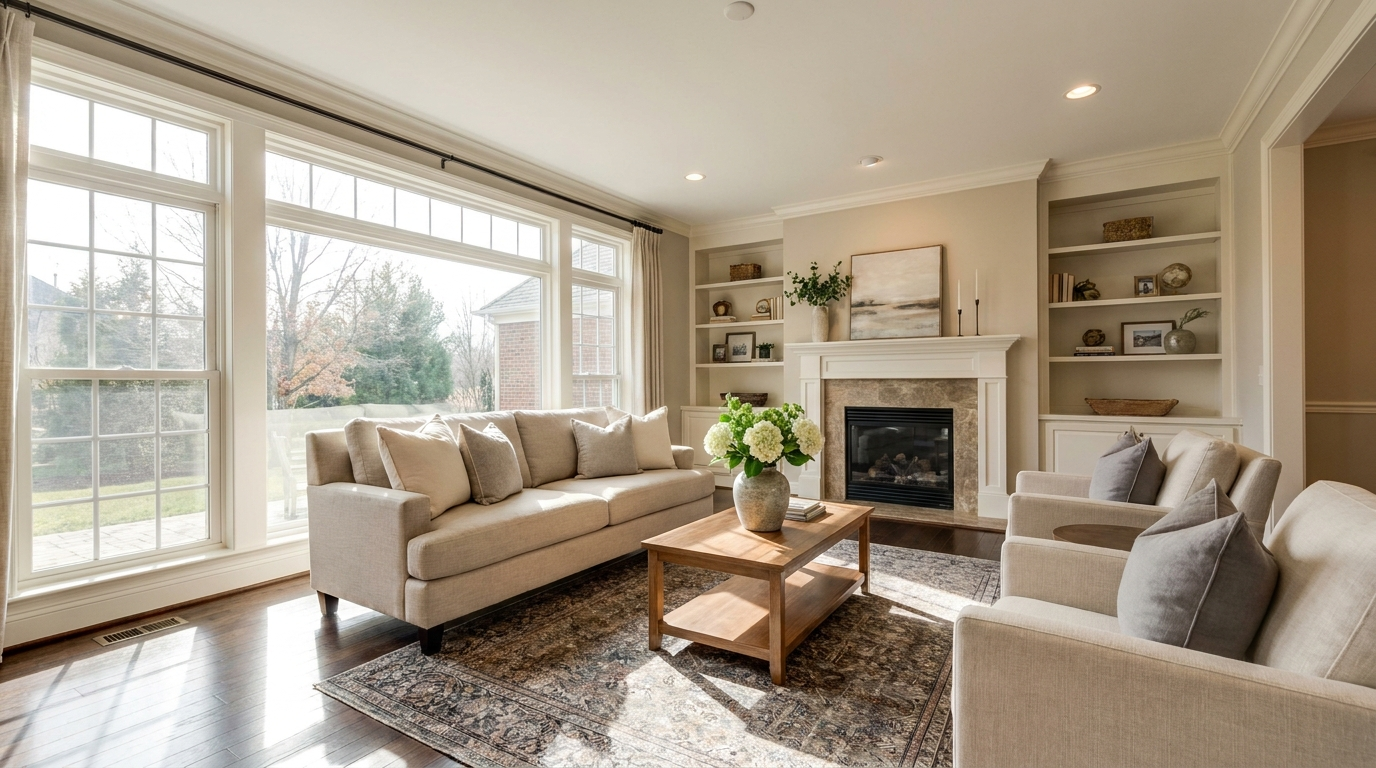
Northern Virginia buyers respond to bright, neutral spaces they can make their own. Open the blinds, replace dim or mismatched bulbs with warm daylight LEDs, and consider a fresh coat of soft, neutral paint in high-traffic rooms. If your kitchen or bath feels dated, a targeted refresh often returns more than it costs — through our partnership with EA Home Design, I can help you scope cost-effective updates that appeal to today’s buyers without over-improving for the neighborhood. Not sure how far to go? A quick home value estimate lets us weigh the return before you spend a dollar.

Budget-Friendly Staging Wins

Great staging does not have to be expensive. A few high-impact, low-cost moves:

  • Rearrange existing furniture to open up walkways and show each room’s purpose.
  • Add fresh greenery, a few plants, or simple flowers for warmth.
  • Layer in neutral throw pillows, a cozy blanket, and a large area rug to define spaces.
  • Let the light in — clean the windows and open every curtain before showings.
  • Give that awkward nook a job: a small reading corner or a tidy home-office vignette.

Ready to Sell for Top Dollar?

Every home is different, and the right staging plan depends on your property, your price point, and your timeline. As a top-producing agent across Fairfax, Loudoun, and Arlington, I will walk your home room by room and build a custom prep plan that fits your budget. Explore my seller services or get to know the area in my Fairfax County guide, then let’s talk. Book a free consultation or call me directly at (571) 429-7477.

Frequently Asked Questions

How much does home staging cost in Northern Virginia?

Professional staging in Northern Virginia typically ranges from a few hundred dollars for a consultation to a few thousand for full staging with rented furniture, depending on home size. Many sellers capture most of the benefit by decluttering, deep cleaning, and restaging their own furniture with guidance from their agent.

Is staging worth it if my home needs updates first?

Often yes, but order matters. Small, high-impact updates like fresh neutral paint, updated lighting, and a kitchen or bath refresh usually come before staging, and I can connect you with our partner EA Home Design to scope cost-effective improvements that pay off at resale.

Should I stage an empty house or a lived-in one?

Both benefit from staging. Empty homes can feel cold and make it hard to judge scale, so light furnishings help, while lived-in homes usually need decluttering and depersonalizing so buyers can picture themselves in the space.

Does staging really help homes sell faster in Fairfax, Loudoun, and Arlington?

In our competitive market, staged homes tend to photograph and show better, which drives more showings and stronger offers. Since most Northern Virginia buyers start their search online, strong listing photos of a staged home are often what earn that first in-person tour.

What should I prioritize if I only have a small budget?

Focus on the kitchen, the primary bedroom, and curb appeal, then declutter every room and maximize natural light. These are the areas Northern Virginia buyers judge first, so a little effort there goes the furthest.

How Much House Can You Afford in Northern Virginia?

“How much house can I afford?” is the first real question for nearly every Northern Virginia buyer — and in one of the country’s higher-cost housing markets, getting the answer right matters more than ever. The good news is that affordability is far more controllable than the headlines suggest. Here is how to land on a realistic, comfortable price range before you ever tour a home.

Start With the Monthly Payment, Not the Price Tag

Most buyers fixate on a home’s list price, but your lender — and your monthly budget — care about the full payment. That payment is often called PITI: principal, interest, property taxes, and homeowners insurance. In many Fairfax, Loudoun, and Arlington neighborhoods you will also add a monthly HOA or condo fee. Working backward from a payment you are comfortable with is the fastest way to find a price range that will not stretch you thin.

The 28/36 Rule (and Where NoVA Buyers Bend It)

A simple lender guideline is to keep your total housing payment at or below 28% of your gross monthly income, and all of your debts combined — car loans, student loans, credit cards, plus the new mortgage — at or below 36%. Many loan programs allow a higher debt-to-income ratio, often up to 43–45%, but qualifying for that ceiling does not mean you should spend to it. Leaving room for maintenance, commuting, and everyday life is what keeps homeownership comfortable rather than stressful.

What Actually Moves Your Number

A handful of levers decide how much home your monthly payment will buy:

  • Down payment: Putting 20% down avoids private mortgage insurance (PMI), but plenty of buyers succeed with 3–5% conventional, 3.5% FHA, or 0% down with a VA loan — a real advantage in our military- and federal-heavy region.
  • Interest rate: Even a half-point difference noticeably changes your buying power, so compare lenders and lock thoughtfully.
  • Property taxes: Effective real estate tax rates run roughly 0.9%–1.15% of assessed value depending on the county, so the same payment buys a little differently in Loudoun than in Fairfax or Arlington.
  • HOA and condo fees: A $300–$500 monthly fee can lower the price you qualify for by tens of thousands of dollars.
  • Closing costs: Budget about 2–5% of the purchase price on top of your down payment.

How Location Changes What You Can Afford

Northern Virginia is not one market — it is dozens. Close-in, walkable areas like Arlington, McLean, and Vienna command the region’s highest prices, while you will typically get more square footage and newer construction farther out in communities like Leesburg, Brambleton, and Ashburn. If you are flexible on commute, shifting your search by a county can meaningfully raise what your budget delivers. Buyers relocating to the area are often surprised how much the right ZIP code can stretch — or shrink — their options, which is exactly where a local buyer’s agent earns their keep.

Frequently Asked Questions

How much income do I need to buy a home in Northern Virginia?

It depends on the price point, your existing debts, and your down payment. As a rough guide, many move-up homes in Fairfax and Loudoun call for a household income in the low-to-mid six figures to stay within comfortable lending limits. A quick pre-approval gives you a precise, personalized number.

Do I really need 20% down to buy in Northern Virginia?

No. While 20% down lets you skip PMI, conventional loans can go as low as 3%, FHA as low as 3.5%, and VA loans require nothing down. Given the large military and federal workforce here, VA financing is especially common across the region.

How much are closing costs in Northern Virginia?

Plan on roughly 2–5% of the purchase price for lender fees, title, taxes, and recording, separate from your down payment. In some negotiations a seller may contribute toward these costs, which an experienced agent can help you pursue.

Is it cheaper to buy in Loudoun or Fairfax County?

You will generally find more home for the money in outer Loudoun communities like Leesburg and Brambleton than in close-in Fairfax or Arlington, though commutes and inventory vary. The best value depends on your priorities around schools, commute, and home style.

How do I get an exact number for my budget?

The most accurate step is a lender pre-approval paired with a conversation about your goals. I am happy to connect you with trusted local lenders and translate the numbers into neighborhoods that fit.

Let’s Find Your Number Together

Knowing your number turns home shopping from stressful to strategic. If you would like a clear, personalized picture of what you can comfortably afford — and which Northern Virginia neighborhoods fit your budget and lifestyle — let’s talk. Book a free, no-pressure consultation or call me directly at (571) 429-7477, and we will map out your path from pre-approval to keys in hand.

How to Write a Winning Offer in Northern Virginia’s Competitive Market

Northern Virginia’s housing market has cooled from its pandemic peak, but it is still firmly a seller’s market in the neighborhoods buyers want most. With the May 2026 median sale price near $812,000 and just under two months of inventory, a well-priced home in Vienna, Arlington, or Ashburn can still attract several offers within a week. The good news is that winning rarely means simply offering the most money — it means writing the smartest, cleanest offer on the table.

What Today’s Northern Virginia Market Means for Buyers

The mid-2026 market is best described as competitive but moderating. Homes are taking a little longer to sell than a year ago — roughly 18 days on average this spring — which finally gives buyers some breathing room. Even so, months of supply are hovering near 1.9, far below the five to six months that signal a balanced market, so demand still outpaces the homes available. Move-in-ready listings near Metro stations and top-rated schools remain the most competitive. Knowing where a home sits on that spectrum, from a brand-new hot listing to one that has lingered for a month, should shape how aggressive your offer needs to be.

Get Fully Underwritten, Not Just Pre-Approved

A standard pre-approval letter no longer makes you stand out. Ask your lender for a fully underwritten approval, where an underwriter reviews your income, assets, and credit before you ever write an offer. To a seller, that looks almost as strong as cash because it removes most of the financing risk. Pair it with a lender who will personally call the listing agent on your behalf — a small touch that carries real weight across Fairfax and Loudoun.

Make Your Offer Stand Out Beyond Price

Use an escalation clause

An escalation clause says you will automatically beat any competing offer by a set amount, such as $5,000, up to a maximum you choose. It keeps you in the running without overpaying when no other strong bid exists. Just require the seller to provide a copy of the bona fide competing offer before the clause kicks in.

Consider appraisal gap coverage

When prices climb faster than appraisals, sellers worry a low appraisal will collapse the deal. Offering to cover a gap — for example, up to $15,000 in cash above the appraised value — reassures them you can still close. Only promise an amount you can genuinely pay out of pocket.

Be strategic with contingencies

Waiving every contingency is risky, but you can still be smart. A pre-offer, information-only home inspection lets you learn the home’s true condition up front so you can shorten or waive the inspection contingency with confidence. Keep your financing and, where possible, appraisal protections in place unless you fully understand the trade-off.

Offer flexible, seller-friendly terms

Price is not the only thing sellers value. Sometimes the winning edge is matching their timeline or removing their stress:

  • A larger earnest money deposit to show you are serious
  • A closing date that fits the seller’s schedule
  • A free or low-cost rent-back so they are not rushed to move out
  • Fast, clean turnaround on signatures and documents

Stay Disciplined So Competition Does Not Cost You

It is easy to get swept up after losing a home or two. Decide on your true maximum before you write, and remember the goal is the right home at a price that still works for your life — not winning at any cost. A good agent helps you craft an offer strong enough to win and sensible enough to live with.

Frequently Asked Questions

How competitive is the Northern Virginia market in 2026?

It is competitive but more balanced than recent years. With about 1.9 months of inventory and homes averaging roughly 18 days on market this spring, desirable move-in-ready listings in areas like Vienna, Arlington, and Ashburn still draw multiple offers, while homes that need work or are overpriced can sit longer.

Do I have to waive the home inspection to win in Fairfax or Loudoun?

Not necessarily. Many successful buyers do a pre-offer, information-only inspection instead, which lets them understand the home’s condition and then shorten or waive the contingency without flying blind. Waiving protections entirely is a personal risk decision your agent should walk you through.

What is an appraisal gap, and should I offer to cover one?

An appraisal gap is the difference between your contract price and a lower appraised value. Offering to cover part of it in cash strengthens your offer, but only commit to an amount you can comfortably pay out of pocket.

How much earnest money should I put down in Northern Virginia?

Earnest money typically runs about 1 to 3 percent of the purchase price in Northern Virginia. A deposit on the higher end signals commitment, and it stays protected in an escrow account backed by your contract contingencies.

Is now a good time to buy in Northern Virginia?

If you plan to stay for several years, yes. Prices keep rising modestly and inventory remains tight, so waiting often means paying more later, while 2026’s slightly slower pace gives buyers more negotiating room than they have had in years.

Work With a Local Expert

Ready to write an offer that wins without overpaying? Ellie Asemani is an award-winning Northern Virginia agent with Pearson Smith Realty who guides buyers across Fairfax, Loudoun, and Arlington counties. Book a free consultation or call (571) 429-7477 to build your winning strategy. You can also explore our buyer resources and our Ashburn community guide to get started.

Which Home Improvements Add the Most Value in Northern Virginia?

Not every renovation pays you back at closing. In Northern Virginia’s competitive market, the smartest upgrades are the ones that match what Fairfax, Loudoun, and Arlington buyers already expect — and skip the ones that quietly drain your budget. If you’re weighing a project this summer, here’s where your remodeling dollars tend to work hardest in 2026.

Curb Appeal Wins Before Buyers Step Inside

From the tree-lined streets of Vienna to the newer communities around Ashburn and Brambleton, buyers form an opinion in the first ten seconds. That’s why exterior projects consistently return more of their cost than almost anything you can do indoors. A replacement garage door, a refreshed front entry, clean exterior paint, and simple, well-kept landscaping deliver outsized impact for a modest spend. Summer showings are unforgiving — overgrown beds, faded mulch, and a sun-bleached front door read as deferred maintenance, so a weekend of power-washing the siding and walkways, refreshing the mulch, and adding a few potted plants can make your listing photos pop before anyone reaches the door.

Kitchens and Baths Still Sell Homes — But Right-Size the Budget

Kitchens and bathrooms remain the rooms that close deals, but bigger isn’t always better for resale. A focused mid-range refresh almost always returns more than a full luxury gut renovation, where high-end finishes are hard to fully recoup. Think updated countertops, refreshed or refaced cabinets, modern hardware, current lighting, and a clean, neutral palette that photographs well.

  • New quartz or granite countertops with an updated backsplash
  • Cabinet refacing or a fresh coat of paint paired with modern hardware
  • Updated faucets, sinks, and energy-efficient lighting
  • Replacing dated tile or a tired vanity in the main bathroom

Just be careful not to over-improve past your neighborhood’s ceiling. A $90,000 chef’s kitchen rarely returns its full cost in a townhome community, even in a strong market — the comparable sales around you set the realistic limit on what buyers will pay. For clients weighing a larger kitchen, bath, or basement project, I often connect them with our partners at EA Home Design to scope the work realistically, and honestly, before they spend a dollar.

The Updates 2026 Buyers Quietly Expect

Many Northern Virginia buyers are relocating for government, military, or tech roles and shopping on tight timelines. They reward move-in-ready homes and discount anything that looks like a project. A handful of updates have quietly become baseline expectations: energy-efficient windows and an efficient HVAC system, fresh neutral paint, durable flooring like hardwood or luxury vinyl plank in place of worn carpet, and updated lighting throughout. A functional home-office nook is now a genuine selling point rather than a bonus.

Don’t Overlook the Basement

In much of Northern Virginia, a finished lower level is almost expected, and it’s one of the most cost-effective ways to add usable square footage. Turning an unfinished basement into a rec room, guest suite, or home gym can meaningfully widen your buyer pool, especially among families and multi-generational households moving into Fairfax and Loudoun. You don’t always need a full build-out: new flooring, fresh paint, brighter lighting, and a tidy, well-organized space can transform how the level shows. If you do finish it, keep the design neutral and flexible so buyers can picture their own use.

Quick Wins Under $2,000

Not ready for a major project? These low-cost updates punch well above their weight:

  • Fresh neutral paint in the main living areas
  • Updated cabinet hardware and modern light fixtures
  • A professional deep clean and carpet shampoo
  • New front-door hardware, house numbers, and a welcoming entry
  • Decluttering, fresh mulch, and trimmed landscaping

Should You Improve, or Sell As-Is?

Sometimes the best return comes from not renovating at all. If your home already fits what buyers want, pouring money into upgrades can cost you time and negotiating leverage. Before you invest, it’s worth knowing your home’s current value and getting an honest walk-through of what will, and won’t, move the needle. When you’re ready to list your home, I’ll tell you candidly which projects are worth doing and which to skip.

Frequently Asked Questions

Which home improvements add the most value in Northern Virginia?

Exterior and curb-appeal projects — a new garage door, refreshed front entry, fresh paint, and clean landscaping — tend to return the most relative to cost, followed by mid-range kitchen and bathroom refreshes. Finished basements also add highly desirable living space for Fairfax and Loudoun buyers.

Should I renovate before selling or sell my home as-is?

It depends on your home’s condition and the comparable sales in your neighborhood. Sometimes light updates win you more than a major renovation, and occasionally selling as-is is the smarter move. Start with a current home value and an honest walk-through before you spend.

Do kitchen remodels pay off in Northern Virginia?

Usually yes, but a focused mid-range refresh typically returns more than a high-end gut renovation. Avoid over-improving past your neighborhood’s price ceiling, since nearby comparable sales cap what buyers will pay.

How much should I spend on improvements before listing?

Tie your budget to your neighborhood’s price ceiling. In many cases, quick wins under $2,000 — fresh neutral paint, updated hardware and lighting, a deep clean, and tidy landscaping — deliver the best return per dollar.

Let’s Map Out Your Highest-Return Improvements

Thinking about selling this year, or simply want to know where your equity stands? Book a free consultation and I’ll help you map out the upgrades that make the most sense for your specific home and neighborhood — no pressure, just honest guidance. Call or text me directly at (571) 429-7477, and let’s make a confident, profitable move together.

Living in Reston, VA: A Homebuyer’s Guide to Northern Virginia’s Original Planned Community

Few Northern Virginia communities are as easy to fall for — or as easy to misunderstand — as Reston. It wasn’t built by accident: when Robert E. Simon broke ground in 1964, he set out to create a place where people could live, work, and unwind without ever feeling boxed in. More than sixty years later, that vision still draws buyers to this corner of Fairfax County. If you’re weighing a move to Northern Virginia, here’s an honest look at what makes Reston special and what to think through before you buy.

A Community Designed Around Nature

Reston — the name comes from Simon’s initials, R.E.S. — was one of the country’s first master-planned communities, and it shows. Instead of subdivisions bolted onto a highway, the town is organized around village centers, four lakes, and more than fifty miles of wooded pathways that link neighborhoods to shops, schools, and pools.

Lake Anne Village Center, the original heart of Reston, still hosts a Saturday farmers market and a close-knit waterfront community. Cluster homes share courtyards and common greens — a design choice that keeps cars at the edges and people on the trails. Between the Walker Nature Center, dozens of neighborhood pools and tennis courts, and the W&OD Trail running along the town’s edge, outdoor life here is woven into everyday routines rather than saved for the weekend.

A Housing Mix for Almost Every Budget

One reason Reston works for such a wide range of buyers is the sheer variety of housing. You’ll find lakefront condos and mid-century contemporaries near Lake Anne, walkable townhomes throughout the village clusters, and established single-family homes on wooded lots in areas like North Point and South Lakes.

As of spring 2026, the median sale price sits in the neighborhood of $590,000 to $600,000 — though that figure spans everything from one-bedroom condos to large single-family homes. Inventory remains tight, often under two months of supply, so well-priced listings frequently go under contract in under a month, sometimes at or above asking. In a market this competitive, knowing your budget and getting pre-approved before you tour isn’t optional. For a closer look at the local process, read my full guide to buying a home in Reston.

Commuting, the Silver Line, and Reston Town Center

Location is a big part of Reston’s appeal. The Metro Silver Line added two stations here — Wiehle-Reston East and Reston Town Center — putting Tysons, downtown D.C., and Dulles International Airport within easy reach without a car-dependent commute.

Reston Town Center anchors the town’s modern side: an open-air district of restaurants, shops, and offices, plus a seasonal ice rink that gives Reston a genuine downtown feel. For the many residents who work for the tech and government-contracting firms clustered along the Dulles corridor, the commute is short — or nonexistent.

Schools, Green Space, and Daily Life

Reston is served by Fairfax County Public Schools, one of the most highly regarded districts in the region, with South Lakes and Herndon high schools anchoring the area. Families are drawn to the mix of strong schools, abundant green space, and a calendar full of community events — from summer concerts on the Lake Anne plaza to festivals at Town Center. It’s a community that manages to feel both suburban and genuinely connected.

A Few Things Reston Buyers Should Keep in Mind

  • Most Reston homes fall under the Reston Association, which maintains the pools, pathways, and tennis courts and charges an annual assessment — budget for it alongside your mortgage.
  • Some clusters layer their own HOA on top of the Reston Association, so review both sets of dues and covenants before you commit.
  • Condos near the lakes and Town Center offer low-maintenance, lock-and-leave living; single-family neighborhoods offer space and yards — decide which lifestyle fits first.
  • With inventory tight, line up your financing and a local agent before you start touring — not after you’ve already fallen for a home.

Frequently Asked Questions

How much does a home in Reston, VA cost?

As of spring 2026, the median sale price in Reston is roughly $590,000 to $600,000, spanning one-bedroom condos to large single-family homes. Prices vary by village cluster and home type, so compare recent sales in the specific neighborhood you’re considering.

Does Reston have a Metro station?

Yes. The Metro Silver Line serves Reston with two stations, Wiehle-Reston East and Reston Town Center, connecting residents to Tysons, downtown Washington, D.C., and Dulles International Airport.

What is the Reston Association fee?

Most Reston homes belong to the Reston Association, which charges an annual assessment that funds the community pools, pathways, tennis courts, and lakes. Some clusters add a separate HOA on top, so review both sets of dues before buying.

What are the best things about living in Reston?

Residents love Reston’s four lakes, more than 50 miles of wooded trails, walkable village centers, and Reston Town Center’s shops and dining, all within a top-rated Fairfax County school district.

Is Reston a good place to buy a home in 2026?

Reston stays in demand, with tight inventory and homes often selling in under a month. Get pre-approved and work with a local agent so you can move quickly when the right home appears.

Thinking About a Move to Reston?

Reston rewards buyers who understand it — the village clusters, the association rules, and the micro-markets that can shift from one street to the next. Whether you’re relocating to the area or simply starting to explore your options, having a local guide makes all the difference. You can also see how I work with buyers across Fairfax, Loudoun, and Arlington counties.

When you’re ready, I’d love to help. Book a free, no-pressure consultation at ellieasemani.com/booking or call me directly at (571) 429-7477. Let’s find the home — and the neighborhood — that fits your life.

Meet Ellie Asemani: An Award-Winning Northern Virginia Realtor

Choosing a real estate agent is one of the biggest financial decisions you will make, so it helps to know your agent has a track record that others have recognized. Ellie Asemani has earned a series of honors as a top-producing Northern Virginia agent, including back-to-back Platinum Member awards and a Lifetime Achievement milestone for career sales. Here is a closer look at those recognitions — and, more importantly, what they mean for you as a buyer or seller.

A Track Record of Recognition

As part of the Sky Real Estate Team at Pearson Smith Realty in Ashburn, Ellie has been consistently recognized among the region’s top-producing agents. Her honors include:

  • $25 Million Lifetime Achievement — a milestone reflecting more than $25 million in career home sales across Northern Virginia
  • Platinum Member, 2021 — awarded for top sales production that year
  • Platinum Member, 2022 — back-to-back recognition for sustained, high-volume performance
  • Northern Virginia award winner for outstanding local real estate service
  • Real Estate Excellence recognition for client results and professionalism

In a market as competitive as Northern Virginia — where thousands of agents serve some of the most discerning buyers and sellers in the country — this kind of recognition is not handed out lightly. It is earned through real results for real clients, one transaction at a time.

What These Awards Actually Mean for You

Plaques are nice, but the reason they matter is what stands behind them. Production-based honors like Platinum Member and a Lifetime Achievement milestone are earned by closing a high volume of transactions year after year. For a client, that translates into concrete advantages:

  • Sharper pricing. An agent who has closed a large number of homes knows how to price yours to sell for top dollar — not so low you leave money on the table, not so high it sits.
  • Stronger negotiation. Repetition builds skill. Ellie has sat at the table for countless offers, counteroffers, and inspection negotiations.
  • Fewer surprises. Experienced agents have seen appraisal gaps, financing hiccups, and timing crunches before — and they know how to keep a deal together.
  • A proven network. Lenders, inspectors, contractors, and fellow agents: relationships built over a long, successful career open doors for her clients.

The Experience Behind the Awards

Ellie’s path into real estate is a big part of what makes her effective. She began as a professional photographer in a real estate office, staging and shooting homes so buyers could picture themselves living there. She holds a degree in graphic design, has hands-on experience in interior design, and spent years alongside her family’s home remodeling and building business, EA Home Design. That blend gives her clients an unusual edge — a trained eye for what makes a home show well and sell faster, plus practical insight into the renovations and improvements that actually add value.

It also shapes how she works. Clients consistently describe Ellie as detail-oriented, calm under pressure, and genuinely invested in their goals — the kind of service that turns a single sale into a lifelong referral relationship.

Recognized Across All of Northern Virginia

Ellie’s award-winning service extends across the region: Fairfax, Loudoun, Prince William, Arlington, and Alexandria. Whether you are buying your first home, selling for top dollar, or simply weighing what your house is worth today, she pairs deep local market knowledge with a recognized record of results. Explore her home-selling services, find out what your home is worth, or browse her Ashburn area guide to see that local expertise in action.

Work With an Award-Winning Northern Virginia Realtor

Awards reflect a history of helping clients win — and Ellie would love to do the same for you. To talk through your buying, selling, or investing goals, book a free, no-pressure consultation or call (571) 429-7477. Let’s put a proven, recognized track record to work on your next move.

How to Buy Your First Rental Property in Northern Virginia

Northern Virginia has quietly become one of the most dependable rental markets in the country. Steady demand from federal agencies, defense contractors, tech employers, and a fast-growing data-center corridor keeps quality homes occupied even when the for-sale market cools. If you have been wondering whether your first investment property belongs in Fairfax, Loudoun, or Arlington, here is a practical, local roadmap for buying your first rental the smart way.

Why Northern Virginia Rewards Patient Investors

Two things make this region attractive to landlords: a deep, reliable tenant pool and unusually low vacancy. Regional vacancy has been hovering near 5%, well below the national average, while the median rent across Northern Virginia sits around $2,750 a month. That combination means well-priced rentals lease quickly and rarely sit empty.

The demand behind those numbers comes from some of the strongest employers in the country:

  • Amazon’s HQ2 and a dense cluster of tech firms in Arlington and Alexandria
  • “Data Center Alley” in Loudoun County, which carries a huge share of the world’s internet traffic
  • The federal government, the Inova health system, and the defense and contracting community
  • The Metro Silver Line, which now reaches Ashburn and is reshaping where renters want to live

Run the Numbers Before You Fall in Love With a Property

Cash flow, not the listing photos, should drive your decision. Start with the rent a property can realistically command, then subtract the mortgage, property taxes, insurance, HOA dues, maintenance, a vacancy cushion, and management (typically 8–10% if you hire a property manager). What is left is your monthly cash flow. Here is roughly what three-bedroom homes rent for today:

  • Fairfax County: about $2,400–$3,200 a month, with the deepest tenant pool and one of the best balances of price and yield in the region
  • Loudoun County (Ashburn, Leesburg): about $2,600–$3,500 a month, and homes within a short drive of a Silver Line station have commanded 8–12% rent premiums
  • Arlington: roughly $3,200–$4,500 a month for a single-family home, with near-zero vacancy and stronger long-term appreciation

One honest caveat: the classic “1% rule” is tough to hit in Northern Virginia because purchase prices are high. Most successful local investors aim for a blend of modest cash flow plus steady appreciation, and they keep healthy cash reserves for repairs and the occasional vacant month.

Where First-Time Investors Tend to Win

You do not need a sprawling estate to get started. Some of the smartest first purchases are also the simplest:

  • Townhomes and condos — a lower entry price and an HOA that maintains the exterior, roof, and grounds, so your weekends stay free
  • Fairfax County — the best mix of affordability, tenant depth, and yield for a first deal
  • Ashburn and Leesburg — Metro access and sought-after schools keep these homes in constant demand; see our Ashburn area guide for a closer look
  • Arlington and Alexandria — a higher entry cost, but the lowest vacancy and strongest appreciation if your goal is long-term wealth

Financing Your First Investment Property

Financing an investment property looks a little different from buying your own home:

  • Conventional investment loans usually require 20–25% down, and rates run slightly higher than owner-occupied loans
  • DSCR loans qualify you on the property’s projected rent rather than your personal income, which helps self-employed buyers
  • House-hacking lets you buy a home with a basement apartment or a two-to-four-unit property, live in one part, and rent the rest, sometimes with as little as 3.5–5% down

Whatever route you choose, get pre-approved before you shop so you can move quickly and make a credible offer.

Avoid These Common First-Timer Mistakes

  • Underestimating reserves — budget for a future HVAC, roof, or appliance replacement, not just the mortgage
  • Skipping a real rent analysis and guessing at income
  • Overlooking HOA or condo rental caps, which are common here and can limit leasing
  • Trying to self-manage a property far from where you live

Ready to Buy Your First Northern Virginia Rental?

The best investment decisions start with good local numbers and a clear plan. As a top-producing Northern Virginia agent, I help first-time investors find properties that pencil out and connect you with lenders and property managers who know this market. Explore my real estate investing services and rental resources, then book a free consultation or call (571) 429-7477. Let’s build your portfolio one smart purchase at a time.

Selling Your Northern Virginia Home This Summer: A Seller’s Playbook

Summer is one of the busiest stretches of the Northern Virginia real estate calendar, but a warm market doesn’t guarantee a fast, top-dollar sale. Buyers across Fairfax, Loudoun, and Arlington have more inventory to compare in June, July, and August, so the homes that are priced, prepped, and presented well are the ones that rise above the rest. If you’re planning to list in the next few weeks, here’s a practical playbook to help you sell with confidence this season.

Why Summer Still Sells in Northern Virginia

Summer demand here is driven by timing as much as weather. Families want to be settled before the new school year, and our region sees a steady stream of relocations tied to federal agencies, government contractors, and the growing tech and data-center corridor that runs from Tysons out to Ashburn. Longer daylight hours make weekday evening showings easy, which widens the pool of buyers who can tour your home. The trade-off is more competition: active listings tend to peak in early summer, so a thoughtful strategy matters more than ever.

Price It Right From the First Weekend

The first ten to fourteen days on the market are when your home draws the most attention. Price it too high hoping to “leave room to negotiate,” and you risk sitting unsold while fresher listings steal the spotlight — which almost always leads to a price cut and a softer final number. The smarter move is to study recent, comparable sales in your specific neighborhood and price in line with what buyers are actually paying right now. If you’re not sure where your home stands, start with a current estimate of your home’s value, then we’ll refine it together with a detailed market analysis.

Summer Staging That Makes Buyers Say Yes

Northern Virginia summers are green, bright, and humid — your staging should lean into the first two while managing the third. A few high-impact moves go a long way:

  • Win at the curb: fresh mulch, a neatly trimmed lawn, and a pair of potted plants by the entry create an instant first impression.
  • Keep it cool: set the air conditioning to a comfortable 70–72°F so buyers linger instead of hurrying out of a stuffy house.
  • Let the light in: open the blinds, clean the windows, and swap heavy drapes for sheer panels to show off natural light.
  • Declutter and neutralize: pack away personal photos and excess furniture so buyers can picture their own lives in the space.
  • Sell the outdoors: stage the deck, patio, or porch as a true living area — in summer it reads as bonus square footage.

Time Your Listing Around Buyer Behavior

Launch day matters. Going live on a Thursday positions your listing at the top of searches heading into the weekend, when most buyers tour. Try to avoid debuting over a major holiday like the Fourth of July, when attention drifts to travel and cookouts. And keep the school-calendar clock in mind: buyers with children are most motivated from late spring through mid-summer, so an earlier-summer listing often captures that urgency before many families pause their search in August.

Pre-Listing Updates With the Best Payback

You don’t need a full renovation to compete. The updates that consistently return the most in our market are the visible, move-in-ready ones: fresh neutral paint, updated light fixtures, refreshed kitchens and baths, and clean, modern flooring. If your home needs more than cosmetic work, my partnership with EA Home Design makes it easy to scope a targeted, ROI-focused remodel before you list — so you improve where it counts without over-investing for the neighborhood. Buyers shopping established communities in Ashburn and beyond increasingly expect turnkey, so even modest upgrades can shorten your days on market.

Your Next Step

Selling well in a busy season comes down to preparation, pricing, and presentation — and you don’t have to figure it out alone. As a top-producing agent serving Fairfax, Loudoun, and Arlington, I’ll guide you through every step, from a custom pricing strategy to staging and marketing your home to the right buyers. Explore my seller services, then book a free consultation or call me directly at (571) 429-7477. Let’s make this the summer your home sells.